Rock temple
Isurumuniya
A temple built into boulders beside a lotus pond, famous for its carvings of elephants bathing and the gentle 'Isurumuniya Lovers'.
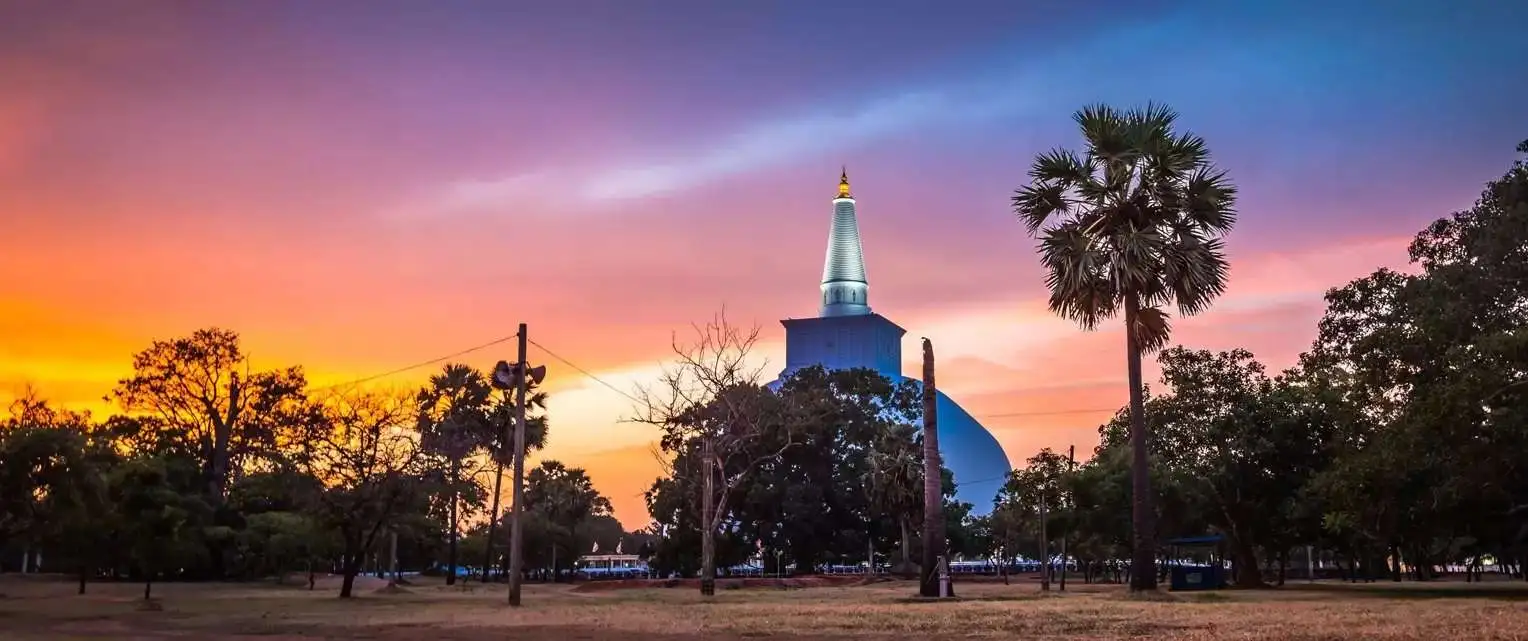
Anuradhapura was Sri Lanka's first great capital and for more than a thousand years one of the most important cities in South Asia. Today it is a UNESCO World Heritage Site, where giant white stupas, monastery ruins and sacred ponds sit among quiet forest and ancient reservoirs.
It is also a living pilgrimage city. The Sri Maha Bodhi, grown from a cutting of the tree under which the Buddha attained enlightenment, is one of the oldest documented trees in the world, and white-clad pilgrims gather here every day. Explore by tuk-tuk or bicycle, and save the big stupas for the soft light of late afternoon.
Wear white or light, modest clothing and remove shoes and hats at sacred sites. Carry socks, as stone paths get hot by midday.
20 highlights, from must-see landmarks to local favourites. Tap any photo to view it larger.
A temple built into boulders beside a lotus pond, famous for its carvings of elephants bathing and the gentle 'Isurumuniya Lovers'.
The brilliant white dome raised by King Dutugemunu in the 2nd century BC, ringed by a wall of carved elephants and the most venerated stupa in the city.
Built by King Mahasena in the 3rd century AD, this brick giant was once among the tallest structures in the ancient world.
A serene 4th-century limestone Buddha in deep meditation, admired for the calm expression that seems to change with the light.
The first stupa built in Sri Lanka after Buddhism arrived, said to enshrine the Buddha's collarbone relic and framed by slender stone pillars.
A finely carved semicircular doorstep, with rings of elephants, horses, lions, bulls, swans and lotus petals. It is one of the finest examples of Sinhalese stone art.
A vast monastery complex founded in the 1st century BC that once housed thousands of monks, with a towering stupa at its centre.
Two beautifully proportioned bathing ponds built for monks, fed through an underground system that filtered the water.
A small, elegant stupa encircled by rows of stone pillars that once supported a protective roof.
The dining hall of an ancient monastery, where an enormous stone trough was filled with rice to feed hundreds of monks.
The stumps of 1,600 stone pillars mark a nine-storey monastic building that once had a copper-tiled roof.
A stupa built by King Dutugemunu after his victory over King Elara, with finely carved altars at its base.
One of the oldest reservoirs on the island, dating to the 4th century BC. It's a peaceful place for sunsets with stupas on the skyline.
A huge rock-cut pond, around 159 metres long, that stored water for the monks of the Abhayagiri monastery.
The hill where Buddhism was introduced to Sri Lanka in the 3rd century BC. Climb a long stone stairway to stupas and wide views over the plains.
A vast 5th-century reservoir built by King Dhatusena that fed Anuradhapura through a gently sloping canal. The Avukana Buddha stands nearby.
Simple stone slabs laid across the Malwathu Oya, part of the ancient road network that linked the city's monasteries.
A large, tranquil reservoir outside the city, good for birdwatching and golden-hour views across the water.
A traditional village experience with a bullock-cart ride, a lake crossing by catamaran and a home-cooked rice and curry lunch.
A natural-looking pond hidden in forest, surrounded by the ruins of a meditation monastery. It's one of the quietest corners of the city.
National parks and heritage sites that pair well with your stay. Kura can fit them into your itinerary.
Anuradhapura, a UNESCO World Heritage site in Sri Lanka, is a significant historical treasure. Founded in the 4th century BC, it served as the island’s first capital for over 1,300 years. The site features ruins of palaces, monasteries, and intricate sculptures, as well as towering stupas like Ruwanwelisaya and Jetavanaramaya. The sacred Sri Maha Bodhi tree, grown from a cutting of the tree where Buddha attained enlightenment, attracts pilgrims worldwide. Explore its vast archaeological treasures and experience the enduring heritage of Sri Lanka.
Wilpattu National Park, Sri Lanka’s largest and oldest wildlife reserve, is renowned for its unique landscape with “willus” (natural lakes). The park spans over 1,300 square kilometers and offers an immersive wildlife experience for nature enthusiasts and photographers. Visitors can spot elusive leopards, elephants, and a variety of bird species, as well as sloth bears, deer, water buffalo, and crocodiles. The park’s remote and tranquil environment ensures an authentic encounter with nature, allowing visitors to step closer to the wild.
A relaxed route that mixes the highlights with local life. Every Kura tour is private, so you can change the pace, add stops or skip anything.
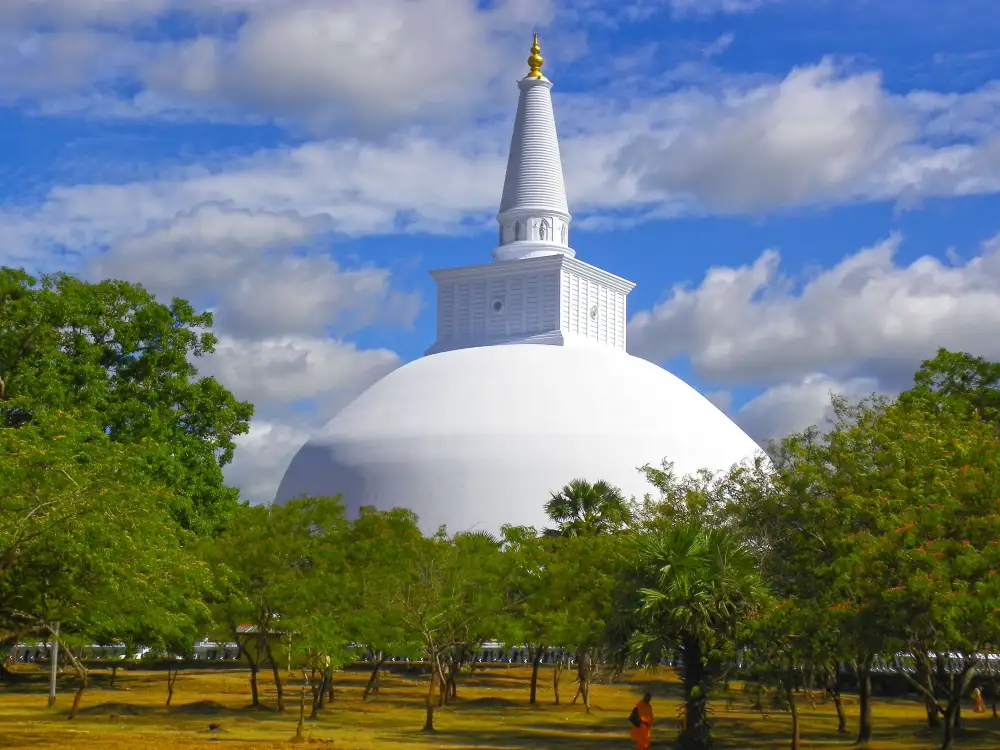
Join pilgrims at the sacred Bodhi tree as the morning offerings begin, then walk to the great white dome of Ruwanwelisaya.
Explore Abhayagiri, the Twin Ponds and the Samadhi Buddha by tuk-tuk or bicycle before the midday heat.
Break for a rice and curry lunch, then visit the rock temple of Isurumuniya and its famous carvings.
Watch the brick giant Jetavanaramaya glow at golden hour, and finish beside Basawakkulama reservoir.
Quick answers to what travellers ask us most. Still wondering about something? Kura replies personally, usually within the hour.
One full day covers the main sights at a comfortable pace. Add half a day if you want to visit Mihintale or go on to Wilpattu National Park.
Yes. Foreign visitors buy a ticket for the archaeological sites, while some active temples such as the Sri Maha Bodhi are entered separately. Kura can arrange tickets as part of your tour.
Wear light clothing that covers your shoulders and knees, preferably white. You remove shoes and hats at sacred sites, so socks help on hot stone.
Yes. Sigiriya is about 2 hours away, and many guests visit Anuradhapura on the way into the Cultural Triangle.
Personally recommended places — ask Kura to book any of them for you.
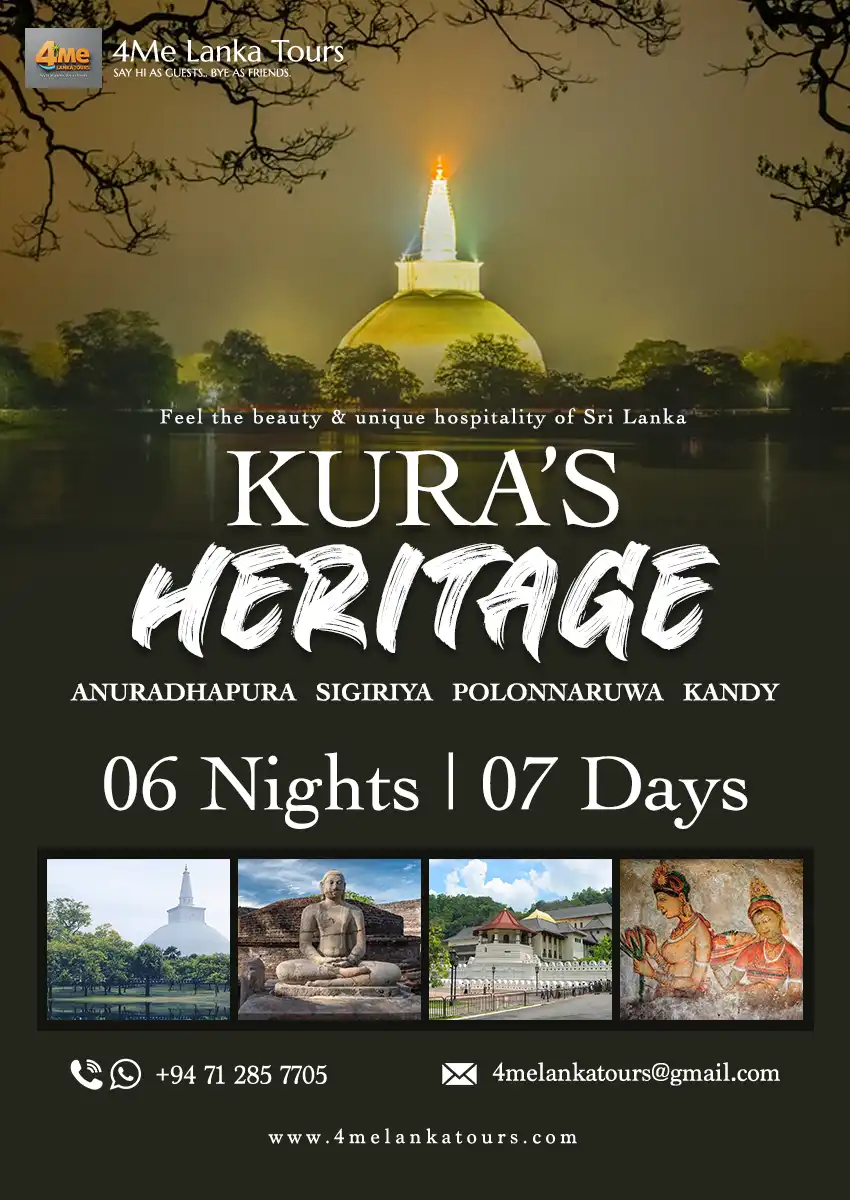 Kura’s Heritage. Anuradhapura, Sigiriya, Polonnaruwa, Kandy
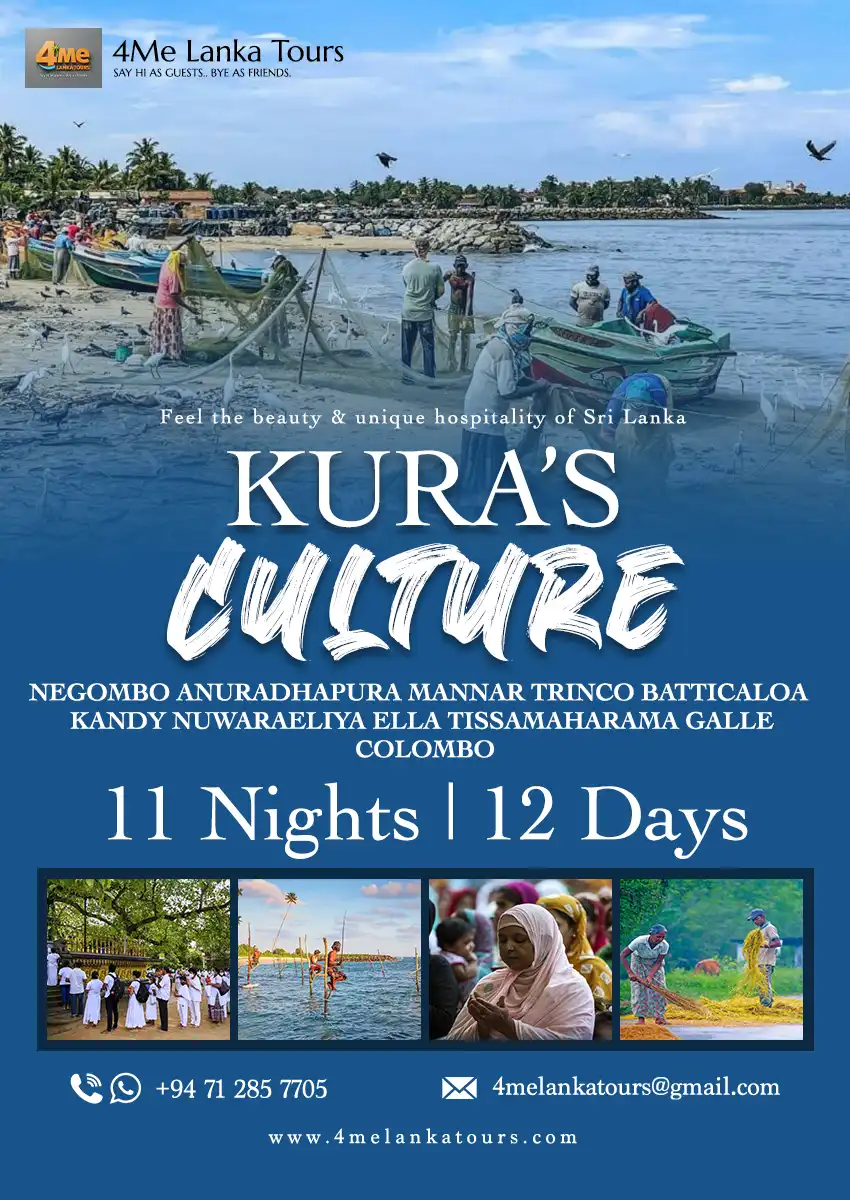 Kura’s Culture. Negombo, Anuradhapura, Mannar, Trincomalee, Batticaloa, Kandy, Nuwaraeliya, Ella, Tissamaharama, Galle & Colombo
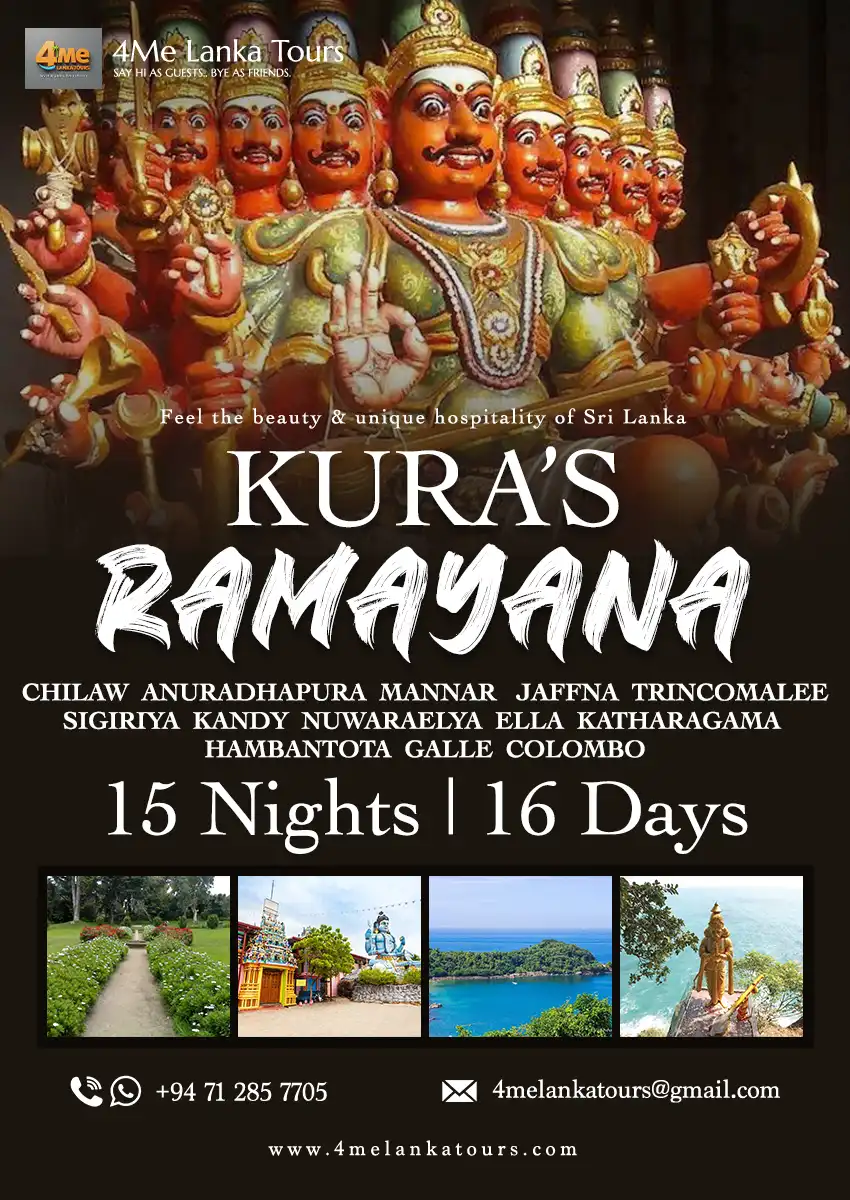 Kura’s Ramayana Trail. Chilaw, Anuradhapura, Mannar, Jaffna, Trincomalee, Sigiriya, Kandy, Nuwaraeliya, Ella, Katharagama, Hambantota, Galle & Colombo
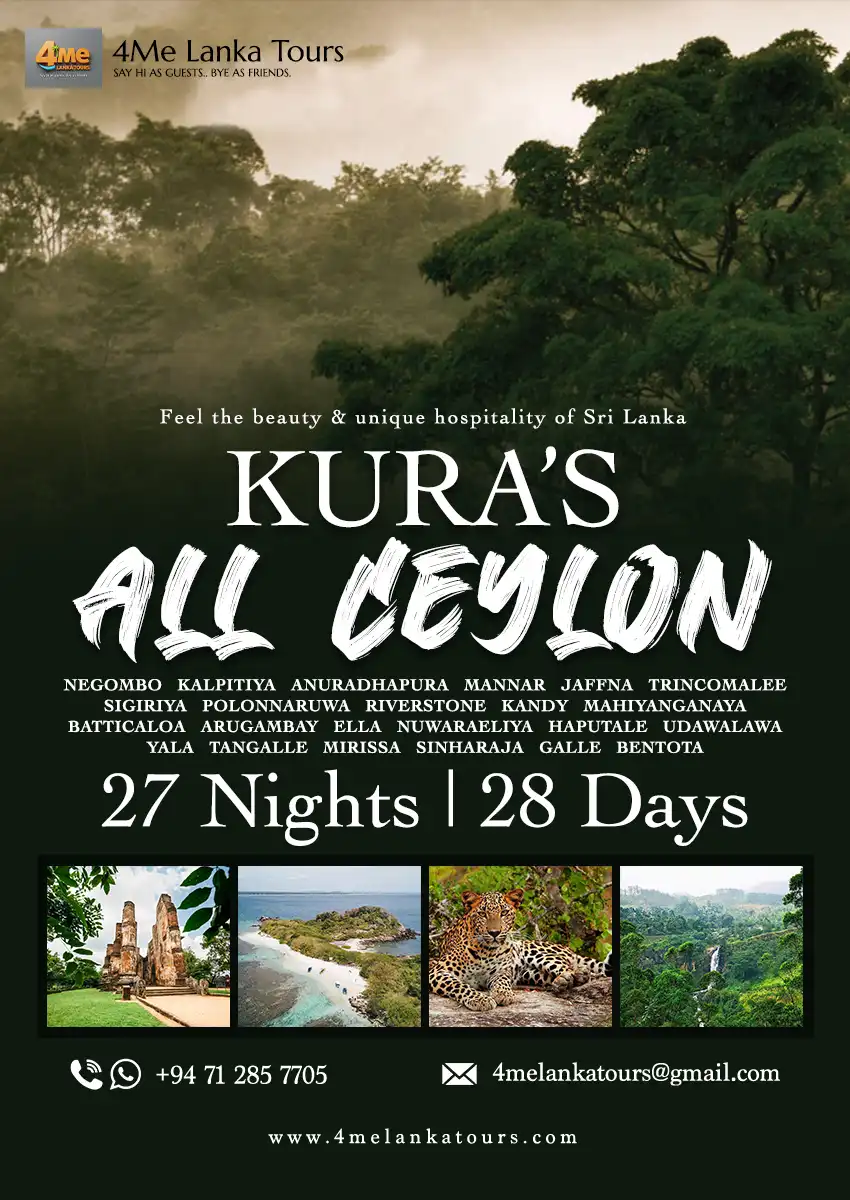 Kura’s All Ceylon. Negombo, Kalpitiya, Anuradhapura, Mannar, Jaffna, Trincomalee, Sigiriya, Polonnaruwa, Riverstone, Kandy, Mahiyanganaya, Batticaloa, Arugambay, Ella, Nuwaraeliya, Haputale, Udawalawa, Yala, Tangalle, Mirissa, Sinharaja, Galle & Bentota
Kura will fit it into a smooth, private route with the right hotels and timing.