UNESCO heritage
Gal Vihara
Four magnificent Buddha statues, seated, standing and reclining, carved from one granite rock face in the 12th century.
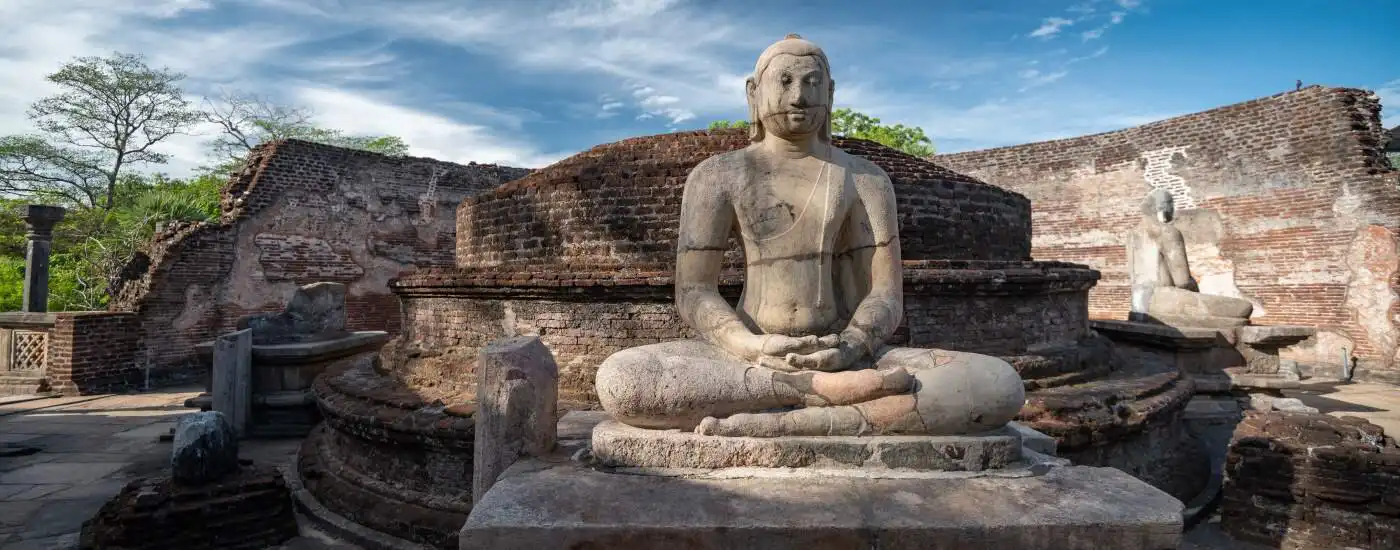
Polonnaruwa was Sri Lanka's royal capital from the 11th to the 13th century, and its compact, beautifully preserved ruins are a UNESCO World Heritage Site. Palaces, temples and stupas stand in parkland beside the vast Parakrama Samudra reservoir.
The highlight is the Gal Vihara, four majestic Buddha figures carved from a single granite wall. The site is easy to explore by bicycle, and its quadrangle of sacred buildings is one of the finest groups of ancient architecture in Asia.
Hire a bicycle and start early to beat the heat. Buy tickets at the museum before entering the site.
23 highlights, from must-see landmarks to local favourites. Tap any photo to view it larger.
Four magnificent Buddha statues, seated, standing and reclining, carved from one granite rock face in the 12th century.
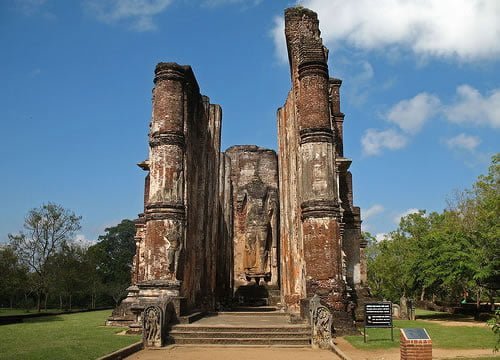
Towering brick walls frame a giant headless standing Buddha in this impressive 12th-century shrine.
A small, exquisite stepped pond shaped like an eight-petalled lotus flower in full bloom.
A dignified rock-carved figure, traditionally believed to show the great king who built the city.
The king's council chamber, with columns and lively friezes of elephants, lions and dwarfs.
A huge stone slab carved like an ola-leaf book, inscribed with King Nissanka Malla's deeds.
The largest stupa in Polonnaruwa, built by King Nissanka Malla in the style of Anuradhapura's great domes.
A shrine famous for its rare surviving frescoes and a Buddha statue in the 'thrice-bent' posture.
A seven-tiered, pyramid-like tower, unique in Sri Lanka and thought to reflect South-East Asian influence.
A monastery and library complex near the lake, with a circular image house.
A brick stupa where many glass beads were found, giving it its name, the 'Bead Stupa'.
Graceful stone pillars carved like lotus stalks, surrounding a small stupa.
A circular relic house with four Buddha statues and fine carvings, the centrepiece of the Sacred Quadrangle.
The massive walls of King Parakramabahu's palace, once said to rise seven storeys.
An elegant stepped royal bathing pool, fed by water from the reservoir.
The 'Sea of Parakrama', a vast 12th-century reservoir that still irrigates the region today.
Watch water spill from the great reservoir. It's a reminder of the island's ancient engineering skill.
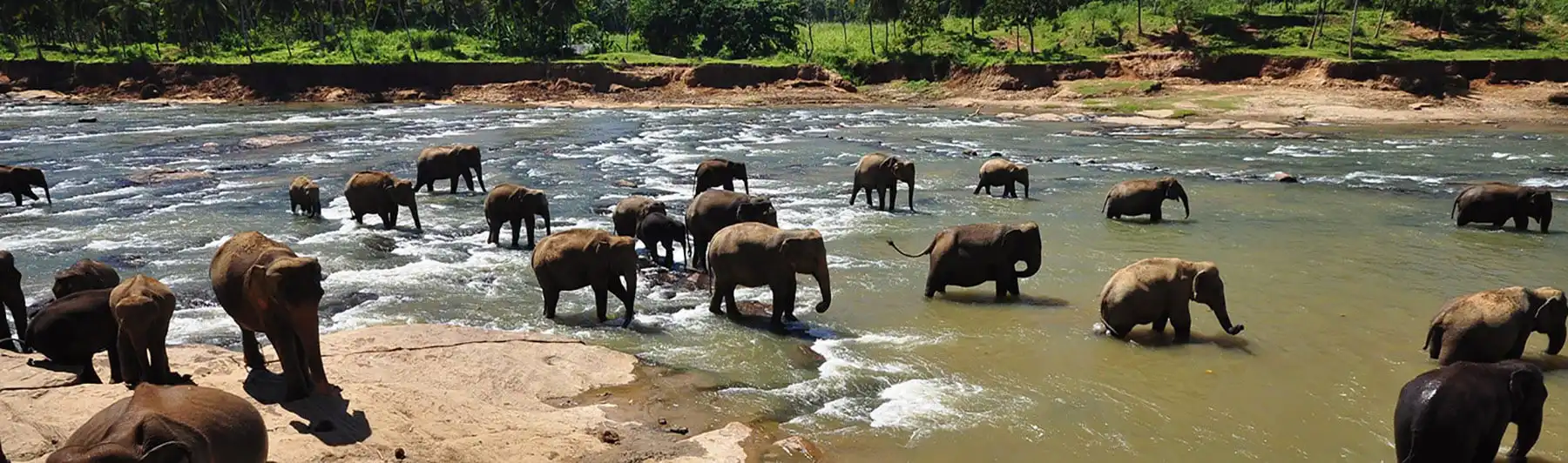
A forested park around an ancient anicut that diverts water to the reservoir, home to elephants and birds.
A scenic ancient reservoir surrounded by forest, beautiful at sunset.
A gentle boat ride on the reservoir to watch birds, fishermen and the sunset.
A large Buddha statue overlooking the Giritale area and its lake.
The bridge over the Mahaweli River at Manampitiya, on the route east towards Batticaloa.
A museum explaining the engineering of Sri Lanka's ancient irrigation systems and buildings.
National parks and heritage sites that pair well with your stay. Kura can fit them into your itinerary.
Polonnaruwa, Sri Lanka’s medieval capital and a UNESCO World Heritage site, is a fascinating destination for history enthusiasts, cultural explorers, and those seeking inspiration. The site boasts well-preserved ruins and archaeological sites, including the Royal Palace Complex, which was once King Parakramabahu I’s residence. Visitors can explore the Audience Hall and the Kumara Pokuna, the iconic Royal Bath. The Gal Vihara, a masterpiece of ancient Sinhalese sculpture, showcases the artistic and spiritual zenith of Polonnaruwa’s golden age. The sacred Quadrangle houses important religious monuments, while the Parakrama Samudra, a man-made reservoir, reflects King Parakramabahu I’s vision of sustainable agriculture and water management.
A relaxed route that mixes the highlights with local life. Every Kura tour is private, so you can change the pace, add stops or skip anything.
Start at the museum, then explore the Royal Palace and Kumara Pokuna.
Admire the Vatadage, Gal Potha and Sathmahal Prasada in the heart of the ancient city.
Stand before the four majestic rock-cut Buddha statues.
Watch the sun set over the vast ancient reservoir.
Quick answers to what travellers ask us most. Still wondering about something? Kura replies personally, usually within the hour.
About half a day to a full day. Exploring by bicycle is fun and efficient.
They're different. Polonnaruwa is more compact and easier to explore, while Anuradhapura is older and more spiritual. Many guests visit both.
Yes. Minneriya and Kaudulla national parks are close by and famous for their elephant gatherings, especially from July to September.
Water, sun protection, modest clothing and socks for walking on hot stone at the temples.
Personally recommended places — ask Kura to book any of them for you.
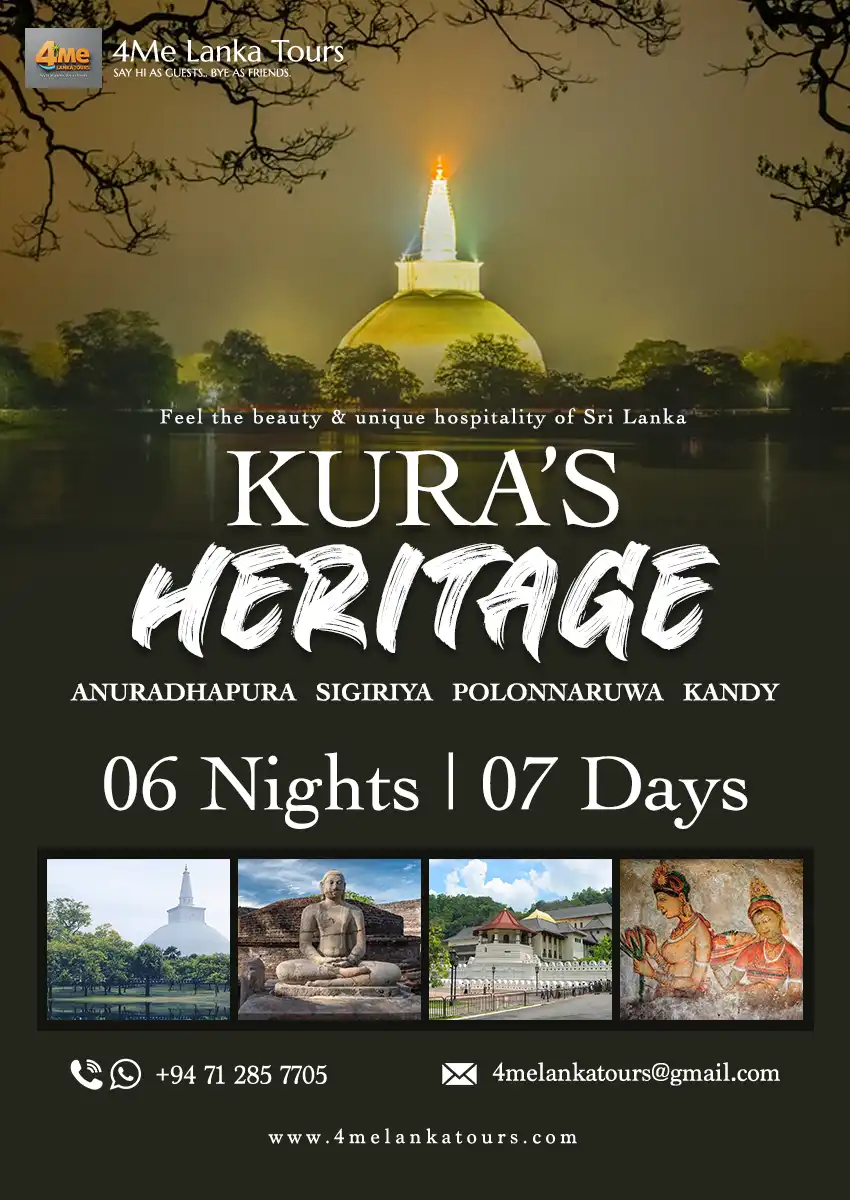 Kura’s Heritage. Anuradhapura, Sigiriya, Polonnaruwa, Kandy
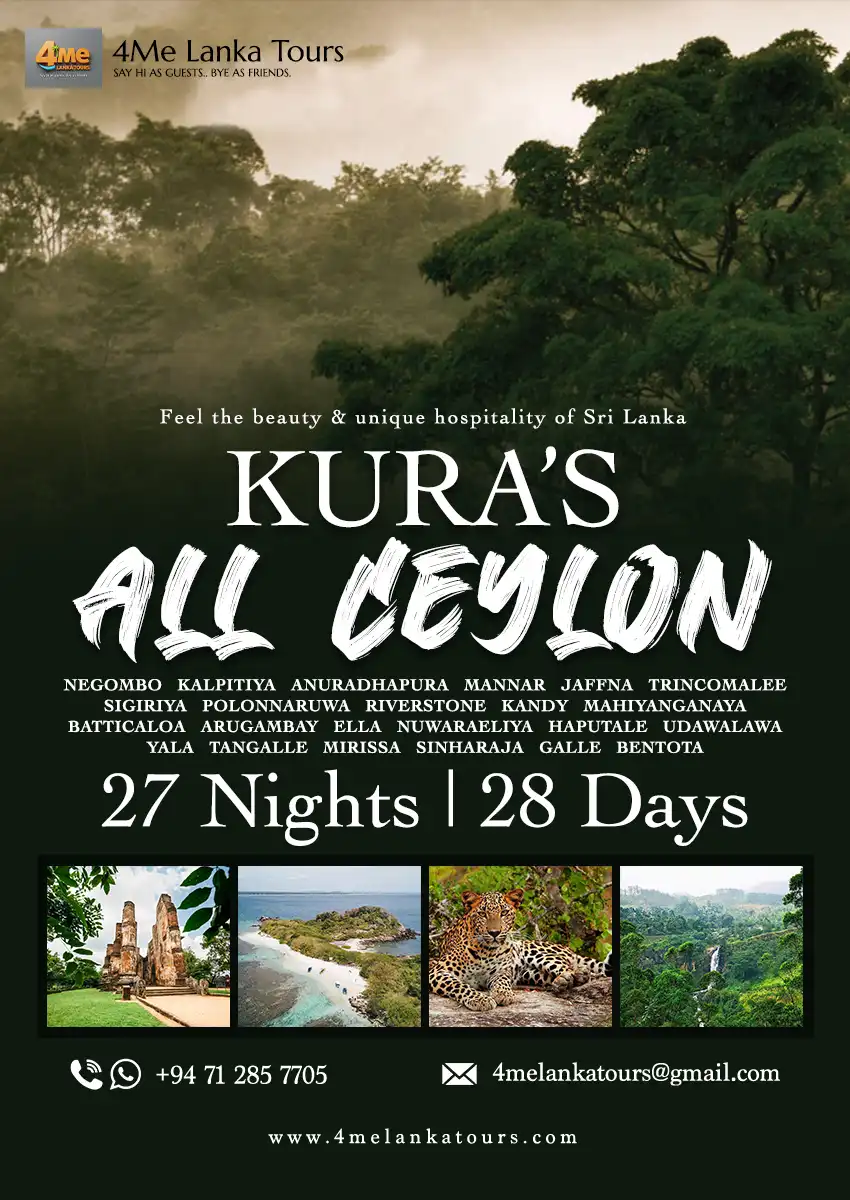 Kura’s All Ceylon. Negombo, Kalpitiya, Anuradhapura, Mannar, Jaffna, Trincomalee, Sigiriya, Polonnaruwa, Riverstone, Kandy, Mahiyanganaya, Batticaloa, Arugambay, Ella, Nuwaraeliya, Haputale, Udawalawa, Yala, Tangalle, Mirissa, Sinharaja, Galle & Bentota
Kura will fit it into a smooth, private route with the right hotels and timing.